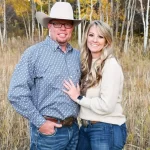
The Idaho Rancher's Wife

The Ranch From the Wife's Perspective

  • Home
  • Blog
  • Workshop
  • About
    • About the Rancher’s Wife
    • Meet our ranch family
    • The Ranch
  • Contact

More Than a Kid Horse

June 23, 2026 by Allison Leave a Comment

These old ranch horses might not be worth much on paper—but I wouldn’t trade them for anything.

Our kids have put in the miles on their horses these last few months, jumping in to work with the crew almost like they were grown cowboys and cowgirls. In a way that can only make a ranch momma’s heart swell, they have put in the long days right by our side, coming home hot, tired, and dusty.

This could be a note about how proud I am of them, and don’t get me wrong, I am. But I’m also grateful for those four-legged partners that have carried them across the range all those long days. Looking back, I can see countless times those kid horses earned their keep in ways that had nothing to do with getting the actual work done.

Having a determined child who was not about to wait to enter the branding pen meant that we had to have a horse that was ready, willing, and able to take care of him in any situation. We needed to put him on a mount we knew we could turn our backs on and everything would turn out okay, every time. It wasn’t until midway through the season that I realized we had chosen just the right mare for the job.

On this particular branding day, we were short-handed, battling the wind, and had already tallied half a dozen days out on the range working. My boy was eager to swing into the saddle and start roping. Following his dad, he scooped up heels left and right as they teamed up to bring in the calves. It was almost like he couldn’t miss.

As every kid does, he wanted to “do it himself,” meaning he wanted to heel a calf and drag it from the herd to the fire all on his own. After finding a calf paired up, he threw his shot, managed a catch, and stacked his dallies only to learn he had caught the calf by just one foot. Startled by the rope, the calf started running around, ducking right behind his horse.

It wasn’t the first time this had happened in the branding pen that day, but it was the first time it had happened to him, and he wasn’t sure what to do. Without even being told, that mare simultaneously did two things to take care of the situation. First, she tucked her tail under faster than you could blink to keep from getting “rim fired.” At nearly the same time, she spun around to keep the calf in front of her, avoiding the kind of tangled wreck that can happen in a hurry.

I was a little amazed that this simple ranch horse had it in her to navigate what could have been a really tricky situation. We knew she would take care of our boy while roping—trailing the calf right, stopping when he went to dally, and dragging it to the fire—but we didn’t realize she was ready to keep him square in the saddle in just about any circumstance.

It isn’t only in the branding pen that I have seen these kid horses step up to take care of my kids. With all of the spring and summer turnouts and cattle drives, even our littlest is game to come along and ride. It’s exciting that even at seven years old he wants to brave a long, dusty day on horseback, but it is also worrisome. I’m always torn between the help I need to give and the responsibility I have as a momma to keep them safe.

When the kids are riding along with me, I work hard to take the best route for them, keep them close, and avoid leaving them behind if I can help it. Every once in a while I have to gather in a stray pair or bring up a pocket of cows to the herd. Usually they trail along together and everything turns out great.

But lately my independent child has decided he wants to be the one to go after the stray animals. Without a word, he will spur up his horse, duck into the trees, and be gone before I know it. Then, not long after, he will pop back out trailing the cattle he went in after. I used to worry in those moments, but I’ve learned that trusty steed has things under control. Now, instead of fretting that everything is okay, I’m full of pride when I see what my little cowboy can do.

These old ranch horses might not be worth much on paper—they aren’t fancy bred, haven’t won any awards, and probably wouldn’t catch anyone’s eye. But I wouldn’t trade them for anything. Their value isn’t measured in dollars. It’s measured in confidence, independence, and peace of mind.

They are the horses that teach kids how to work, how to solve problems, and how to handle responsibility. They are the horses that bring them home safe after a long day, forgive their mistakes, and quietly take care of them when Mom and Dad can’t be right beside them. Around here, those old kid horses have carried far more than calves and cowboys across the range. They’ve carried my greatest treasures, and that’s worth more than anything money can buy

All Bluff or All Fight

June 12, 2026 by Allison Leave a Comment

Some cows just throw dirt and make a lot of noise. Others mean every bit of it.

Having spent my whole life around cows, it takes a lot for one to make me nervous. I’ve seen my share of cows that have a big bluff, but little fight. They throw some dirt, put their head up in the air, and beller, but that’s all they do. This spring however, I’ve had more than enough opportunities to learn the line between all bluff and all fight.

Let’s back up for context. My husband and I had an opportunity fall in our collective lap that allowed us to buy a few cows of our own. With the busy spring work, I knew the feeding, checking, and tagging would likely fall on my chore list, something I was actually excited about. I figured the kids could pile on the 4-wheeler with me so we could trail through the cows, count and tag the newborns, then put a bale in the feeder each day.

It was all a pretty simple plan. Which should have been my first warning.

I learned very quickly that these cows had what I can only describe in a positive way as strong mothering instincts. Red Angus are known for their maternal traits. Some of them are apparently overachievers, a fact I learned firsthand as I sat holding a calf while its mother came sprinting at me, bellowing for the whole herd to hear.

I’ll admit the first few times those momma cows got loud and in my face, my heart thumped a few extra beats. Regardless of the adrenaline surge, I got my work done quickly and unscathed. I might have even patted myself on the back on a few of the rowdier, nose-to-nose cows. And the silver lining, those moments helped me form a very informed opinion of which cows were worth keeping and which were definitely on the cull list.

With a handful of calves on the ground, we began loading them up and taking them to summer pasture, a chance to see a whole new side of them. A side I didn’t like at all.

More than once we had to take a deep breath and regroup when the handful of pairs we were bringing into the corral scattered like chickens with a fox in the coop. As the weeks wore on, we had to change tactics just to get the cows in the corral and still live to tell about it.

The first of our ornery cows was #41. We knew from day one she was full of more than bluff. Her calf had slipped through the wire fence, a blessing in disguise. I opted to tag the calf first before pushing it through, and I was glad I did because the fence was the only thing standing between me and a very unpleasant introduction.

When it was her turn to be sorted, #41 ducked and dodged us more times than I could count. And then she got mad, a moment I distinctly remember because she turned straight for my son on his motorbike with every intention of causing damage. My momma bear instincts kicked in and all rational decision-making left the building. Let’s just say we both won that fight—she didn’t end up in the corral, but I got in enough good licks to feel vindicated. The 4-wheeler may tell the story differently.

#41 must have sensed we meant business when we showed up on horseback with ropes in hand, because she trotted right into the corral without a fuss. We thought maybe we had turned the corner. Turns out she was just lulling us into a false sense of security, because when it came time to load her in the trailer she reminded us of her deep-seated hatred for us. After just a few steps into the pen, that darn cow threw her head in the air and had us hopping the fence like a jackrabbit with a pack of cow dogs on it.

Obviously we lived to tell the tale—a tale highlighted by the fact that bluff was a five-letter word that five-letter cow didn’t know.

Unfortunately, she wasn’t even the worst of them. A week later we went to move another group of cows, and had an encounter with one that was lucky we still turned right to pasture instead of left to the butcher shop. I had my suspicions early on about #34, but had excused her high-headed chase after a long haul from Montana and a trip through the chute to be branded. She was loud and snorty tagging her calf, but not the worst of the bunch.

#34 was on my keep-an-eye-on-her list, but thirty seconds into the day she graduated to the don’t-turn-your-back-on-her list. She walked into the corral pleasant as could be, then promptly turned to run back out the gate, smashing the motorbike that attempted to block her way in the process. Since we don’t back down from a fight, we “convinced” her back into the corral where the fight continued. It might have taken an hour to get her loaded, perched on the fence the whole time, but we won in the end. I’m still not convinced the butcher shop wasn’t the better option.

The following day we had a few of the last heifers to run through the chute, and they too thought we’d enjoy scaling the fence. I don’t know if there was a sign on our backs that said “Try me!” or what, but apparently word had spread through the herd. In a small moment of fatigue, I might have shouted, “I’m so tired of being chased at!”

There are only a few left to turn out, and my hopes are high that the worst is over. If nothing else after a spring spent climbing fences, dodging charging cows, and wondering if there was a bounty on my head, I’ve come to a conclusion: some cows are all bluff, some cows are all fight, and fences exist for a reason.

Final Range Branding: Deep Creek Cleanup

May 4, 2026 by admin Leave a Comment

The last range branding day of the stretch was a slower cleanup kind of day, with fewer calves left to gather and brand. After the wind the day before, the weather turned just about perfect, making for a pretty enjoyable day to be horseback.

I spent more time roping than taking pictures, so this set looks a little different than some of the others. Fewer action shots and more of the small details that make up a branding day—the hands, the gear, the dust, and the moments in between.

Not every day is fast-paced or packed full, but there’s something good about the quieter ones too.

More Than One Right Way

February 10, 2026 by Allison

Lessons in humility, experience, and learning to mind our own operations.

I never thought I would say this, but I believe I’ve found a downside to teaching our five-year-old the ins and outs of ranching. With all his newfound knowledge, my little rancher is suddenly convinced he knows everything there is to know — and he’s more than happy to tell you all about it.

It’s adorable when he narrates his toy setup in his bedroom. It’s even endearing watching him work alongside his dad, small as he is, doing his best to keep up. But the cuteness wears thin when he’s ready to explain to everyone else how it should be done.

Living out in ranch country means we spend plenty of miles on the road, often passing someone else’s operation. And almost without fail, a commentary begins from the back seat.

“That pivot shouldn’t be off.”

“Why are those cows still there?”

I have to suppress a smile at the certainty behind such strong opinions coming from such a small person. But at the same time, it’s hard not to notice how familiar it sounds. Apparently, confidence comes early — experience follows later.

And unfortunately, this isn’t unique to my five-year-old.

It seems far too easy to jump to conclusions about how someone else runs their operation — when they irrigate, how they feed, when they move cattle, or why something looks different than we expect. Somewhere along the way, observation turns into judgment, even when we don’t have the full picture.

They say there’s more than one way to skin a cat. I’m here to say there’s more than one way to ranch.

Take haying, for example. Round bales versus square bales — one must be better than the other, right? Except both serve a purpose. Round bales can be put up sooner with a little more moisture, and net wrap protects them well in the stack. Square bales, on the other hand, shine when it comes to hauling and efficiency. One isn’t right and the other wrong. It depends on the operation.

Branding season brings its own debates. Calf tables versus roping and dragging. For us, range brandings and skilled cowboys make roping the clear choice. But for operations with fewer hands or closer corrals, a calf table might be exactly what makes sense. Different circumstances call for different tools.

Even moving cows can stir strong opinions — horses versus four-wheelers. There are cows to move either way, and as long as they get moved, the job is getting done. Though if I’m honest, if there’s a chance to saddle a horse instead of turning a key, I’ll take it every time.

Calving systems, feeding programs, grazing rotations — every ranch is a balance of land, livestock, labor, and goals. What works beautifully for one may be completely impractical for another.

The trouble comes when we forget that.

When it’s time to make decisions for an operation, there are a few things that matter more than outside opinion. First, knowing your goals — what you’re actually trying to accomplish. Second, knowing what your operation has to offer — the land, the resources, the skills, and the help available. Systems that align with both will always make the most sense.

From there, you can try new things. Not because your neighbor is doing them. Not because they’re trendy. But because they might help you do your job better.

And sometimes, they won’t.

That’s part of it too.

The older I get, the more I realize that experience has a way of softening certainty. Confidence earned through repetition looks different than confidence born from assumption. One listens more. One asks better questions.

My five-year-old will figure that out in time.

Until then, I’ll keep listening to his opinions from the back seat, smiling to myself, and reminding us both that ranching — like most things worth doing — isn’t about finding the one right way.

It’s about finding your way, being open to learning, and leaving room for the possibility that someone else might be doing it differently — and doing it just fine.

How to Declutter a Rancher (Yes, It’s Possible)

January 27, 2026 by Allison

A practical, good-humored guide to sorting hats, gloves, boots, and everything in between.

No one has written a chapter on how to declutter a rancher. Until now.

Everywhere you look, someone is taking on new habits, breaking old ones, or reorganizing their life. I’ll admit — my curiosity often gets the better of me. I scroll through the upgraded life hacks, improved menus, and color-coded cleaning schedules. Occasionally, I try one. Every now and then, an idea sticks.

But in all my years of perusing cleaning, organizing, and decluttering guides, I’ve never once seen a category dedicated to ranchers. Either no guru has had a rancher in their life long enough to see the need, or they simply weren’t brave enough to take it on. So today, we begin.

The easiest place to start is the hat collection. Every fertilizer rep, banker, nutrition consultant, tractor dealer, feed clerk, and veterinarian has likely contributed at least one. Despite what they may tell you, they don’t need every hat — and they don’t even like all of them.

Some have given everything they have to give. Others were never chosen in the first place. Keep a handful of clean ones for town, rotate a few for work, and let the rest move on.

Once the ball is rolling, turn your attention to gloves. You will hear arguments:

“That one’s still good — its mate just wore out.”

“It only has a small seam popped.”

“That’s my backup pair to my backup pair.”

I understand the logic. Winter gloves, summer gloves — all makes sense. But when there are extra pairs stacked in the corner and seven left-handed gloves for only two right-handed ones, it’s time to intervene.

Boots follow the same rule. Town boots, work boots, riding boots, long-day boots — all fine. But the pair that was replaced three times ago? Let it go. Don’t waver. The chaos they create sitting in the way, tripping people left and right, just isn’t worth it.

Before leaving the mudroom, tackle coats, sweaters, vests, and scarves. Ranchers are loyal to old favorites, but even loyalty has limits.

Closets are next. They make do with the old while still chasing something new. Keep what fits, toss what’s torn, stained, or beyond repair. If there are still too many, have your rancher try them on. There may be whining. Stay strong.

Work pants follow one rule: never mend a patch you’ve already mended. If they’re worn enough to need fixing again, they’ve done their duty.

Once the wardrobe is tamed, gather wire bits, fencing clips, loose tags, and miscellaneous tools that migrated indoors. Send them back outside. They may not end up where they truly belong, but they are no longer in the house — and that’s a win.

Next come the less obvious collections. Bathrooms often house too many bull sale catalogs and ranching magazines. If they haven’t been read yet, they likely won’t be. While you’re at it, clear out outdated vaccines and medicines in the fridge and pantry. Lunch boxes, coolers, water bottles, and ice packs deserve the same reckoning. Even if you never acquire another, you already have plenty.

One final thought: ranchers are excellent at sorting. They do it every day. You just might need to change the setting. If they can call out “by” or “in” while culling cattle, they can manage the same system indoors.

If you’re successful inside, the garage might be next. Broken tools, old truck parts, abandoned projects — all can go. More sensitive items, like worn-out tack or retired hot shots, may take longer.

In full transparency, I have a rancher who could use a real dose of decluttering. There are too many good hats, gloves with a little life left, favorite shirts, magazines worth skimming again, and tools that just need “a little attention.”

This piece is largely theory and wishful thinking, not a record of triumph.

But if you try it — even just taming the hats and gloves — the house feels lighter, and the rancher…well, they keep riding on.

Small Changes That Make a Big Difference on the Ranch

January 21, 2026 by Allison

Why steady, thoughtful improvements matter more than sweeping change in agriculture.

Winter has a way of slowing things down enough to notice what usually gets overlooked. With the cows settled in and the rush of the season behind us, there’s finally time to walk through the shop, study the books, and think a little harder about why we do things the way we do.

Our ranch has been running cattle on the same ranges for more than a hundred years. We still calve, brand, doctor, and wean out on the range with some cows, never bringing them back to the home place — the same way it’s been done for generations. In many ways, those traditions are the reason the ranch is still here.

But every once in a while, we have to pause and ask whether we’re doing something because it’s the best way to run our operation — or simply because it’s the way it’s always been done.

Don’t get me wrong, there is plenty of room for keeping to the traditional cowboy ways. Our ranch has been running cattle on the same ranges for more than 100 years. We calve, brand, doctor, and wean out on the range with some cows, never coming back to the home ranch, just like they did all those years ago. We do it because it’s the best way we can run our operation.

But there are also places where we’ve made changes, capitalizing on improvements in genetics, machinery, technology, and management practices that have strengthened our ranching business.

Often when we think about making a change, we imagine it needs to be something big and dramatic — something that produces immediate, noticeable results. But the truth is, most of us resist those kinds of changes. They’re uncomfortable, disruptive, and risky.

What if, instead, we focused on making small changes?

There’s a story about the British cycling team that illustrates this idea well. For nearly a hundred years, they struggled to find success, constantly searching for one big change that would finally turn things around.

That shift came in 2003 when Dave Brailsford was hired as performance director. Instead of chasing a single breakthrough, Brailsford focused on what he called the “aggregation of marginal gains” — the belief that small improvements, stacked together over time, could lead to meaningful progress. As he put it, if you broke down everything that went into riding a bike and improved each part by just one percent, the overall result would be significant.

They went to work making small adjustments — refining equipment fit, improving recovery practices, reducing illness, and even paying attention to sleep. None of the changes were revolutionary on their own.

But together, they worked.

In the Olympic Games that followed, the British cycling team dominated the podium, setting records and proving that steady, incremental improvements could change the trajectory of an entire program.

It’s not hard to see how the same principle applies to agriculture, where progress is rarely dramatic and almost always cumulative.

Small changes are often more realistic, more achievable, and far less painful to implement. Over time, they can quietly reshape an operation in meaningful ways.

One place to start is record keeping. As the saying goes, you can’t improve what you don’t measure. It doesn’t have to be complicated or fancy — a notebook, a small ledger from the feed store, a spreadsheet, or an app will do. Recording herd health, feed routines, start and end dates, or grazing conditions helps reveal patterns and trends that might otherwise go unnoticed.

Maintaining large acreages can feel overwhelming, but simply cleaning up what’s right in front of you is often the best place to begin. Pick up old wire. Gather stray baling twine. Clear rocks that will cause trouble come haying season. One small task at a time adds up faster than you’d expect.

Carrying wire stretchers and a roll of wire makes it easier to fix minor fence issues before they become major ones. There will always be places that need a full overhaul, but plenty more that just need tightening or clipping to keep cattle where they belong.

Routine equipment maintenance is another small change that pays dividends. Keeping tractors, implements, trucks, and four-wheelers in good working order saves time, money, and frustration down the road.

Sometimes improvement means asking for help. Veterinarians, feed consultants, agronomists, or market-savvy sales representatives can offer insight and experience that helps guide thoughtful adjustments.

Getting an early start — whether on a workday, irrigation, or paperwork — is another quiet habit that can make a noticeable difference. Something will always come up to disrupt plans, and starting ahead allows room to handle it without rushing or settling for “good enough.”

Herd health, too, benefits from small improvements over time. Adjustments to feed, more frequent checks, better preparedness during doctoring, and thoughtful decisions around branding, turnout, weaning, and culling all influence the long-term direction of a herd.

Change has never come easily in agriculture, and it probably never will. But standing still isn’t the same as holding steady. Over time, it’s closer to drifting.

This quieter season gives us space to notice the small things — the loose wire that needs tightening, the records that could be written down, the early start that might save a long day later on. None of them feel like much on their own. But together, they shape the direction of a ranch just as surely as the big decisions do.

The goal isn’t to abandon tradition. It’s to tend it carefully — making small, thoughtful adjustments so that what was handed to us not only survives, but remains strong enough to hand on again.

Just Bad Luck Days on the Ranch

June 25, 2023 by admin

“If I didn’t have bad luck, I wouldn’t have any luck at all!”  There might not be a truer phrase for a rancher to admit to than that.  Some days it feels like all the stars have to align for the work to get done without any hitches, hiccups, or holdups.  Whether it is Mother Nature the parts man or ornery old boss cow, someone, somewhere is cooking up a disaster to derail even the best laid plans.  You can always count on the fact that in the middle of the cattle work, farm work, machinery fixing, fence fixing or anything else on the never end to-do list, something, without fail, will go wrong.  And while I don’t have any research data to back me up, I’m pretty sure that the probability and the size of such a disaster goes up exponentially when its a high stakes situation, and goes up even more so when there is zero time for a breakdown and a do-over.

Okay, yes that may be an overdramatization, but you have to admit that there are days when things, not only don’t go right, but seem to go especially bad.  It’s those sort of days you might have to concede the victory to fate, turn in early so nothing else can go wrong and laugh at the day to keep from crying.  Looking back, we have had our fair share of bad luck days, some we can laugh at now… some that we still need a little more time.  

This last winter felt like one stroke of bad luck after another.  I mean, to begin with, it had to be bad luck that after years of drought and praying for moisture, it all comes pouring down in one, unending winter.  Of course, we never look a gift horse in the mouth, but if I could have been in charge of the timing of said moisture, it certainly wouldn’t have come in a near record breaking winter fashion.  

In a season where we really needed all the things to go right, I swear everything would go wrong, especially on the days when we were far from home and help.  We put one fire out after another (not literally fires, but that surely would have warmed things up while we were freezing our fingers off).  If it wasn’t the tractor door shattering (on a rented tractor, no less) to keep the work from being done, it was the blown hydraulic hose on the back.  If it wasn’t the flat tire on the backhoe that kept us from feeding, it was the massive sinkhole that swallowed the newly fixed tractor.  Not only did the gator break down but the snowmobile wouldn’t start either.  You’ve heard of the hand Midas that turns everything that it touched to gold?  We had the exact opposite.  We touched it and it died, quit, or broke.

Sometimes it isn’t the hand that is cursed, it’s just the machine that refuses to stay in running condition. Our problem child of a pivot is simply dubbed “the old pivot” although it might be more accurate to call it the-leaky-run-down-dilapidated-old-pivot.  As soon as one hole is plugged or fixed, a new pinhole starts gushing.  Aside from its leaky bits, there are computer problems and electrical problems.  You might say that running an old pivot just signs you up for breakdowns, but I think this pivot runs at a higher level of breakdowns.  If we have any luck this year, it’s getting that old thing replaced… hope I didn’t just jinx it!

We might just make our own bad luck for the number of times we say things like “we are all caught up with the shop work” or “all the cows are settled.”  It’s like those darn cows know when we breathe a sigh of relief and work to stir things up.  If I had a dollar for everytime we think the cows are settled and then get a phone call that says the cows are out, we could pay someone else to keep them in.  They are masters at finding the down wires, gates left open or just barging their way through.  And with the sort of luck we run, we get those cows back in but can’t find the hole they are crawling through, so they just keep getting out.

Mother Nature especially likes to throw a wrench in our carefully planned out days.  Despite knowing the old adage that you bale hay while the sun shines, it always seems we get into the wrong project for the weather.  We meticulously check the forecast, make plans to best fit the conditions of the day, only to find the weatherman was wrong once again.  It’s spraying weeds or cutting hay because it’s sunny for days on end to only have thunderstorms suddenly come in, day after day.  Or planting fields just before the predicted storms never roll through.  We move cows or plan to brand, sure it’s supposed to be a nice, sunny day, only to be caught in Idaho’s blustery wind, something we should learn to count on anyway.

 Oh the luck of a rancher.  It seems the ball never bounces our way.  But truth be told, we are far luckier than we deserve with the great industry we have to be a part of.  We have the great fortune of working the land, having the satisfaction of working as a family, and doing a work we love.  There may be moments, some days more than others, that it feels like we have nothing but bad luck.  But I will take these bad luck days on the ranch over any other day.  Who needs luck when we live a life so blessed.

A Strong Ranch Kid Immune System, Brought to You by Dirt

November 28, 2022 by Allison

The weather has turned colder and one of the unfortunate downsides of everyone congregating inside is that we pass our germs around much faster. We look for sorts of remedies and quick fixes because being down and out with sickness is no fun. It’s not a quick fix, but ranch life has it’s own way to help keep colds at bay.

Wanna hear about it? Simply put, we just get down and dirty.

In a lot of ways, it’s hard to believe all those folks that say that ranch raised kids have stronger and healthier immune systems than their counterparts that live in the city.  Someone might argue that just the opposite should be true, that all that exposure should lead to all sorts of illnesses and infections.  But years of first hand evidence, plus a lot of official scientific research can’t be disputed.  Kids raised in the country with animals, pollen filled air and a little extra dirt under their nails have been found to have a lower occurrence of asthma, allergies, seasonal colds and many other illnesses. 

Like any good mom, I try to keep my kids clean, wash their hands and faces and lease once in a while.  But now that I think of it, letting the dirt go a little longer isn’t such a bad thing.  In fact, I’m doing them a favor, right?  

There’s too many ways to count how ranch kids keep boosting their immune systems so let me just give you a snapshot look at some ways ranch raised kids are working on having those strong immune systems.

There is no one more defenseless and appealing for a dog to steal a lick from than that ranch kid that just isn’t eating his ice cream fast enough.  The family pup is only trying to help and keep it from melting too fast or making such a big mess.   On top of that, man’s best friend will share a few germs to help him have a good, strong immune system.  Just don’t think what that cow dog was last licking on before he went for the sticky cheeks.

Along with the weekly water check, the range salt has to be checked and the kids are always willing to be on that.  Not only do they check to see if there are salt blocks out but they check to make sure that they are indeed, still salty.  There is only one way to check that and that is by taking a big ol’ lick.  Of course there is no thought as to what last licked the salt block or anything else that might have come across it.  Nope, just a big, salty lick and a good dose of germs to keep that immune system running at peak performance.

Moms are always concerned that they give their kids enough vitamins, but ranch moms never have to worry so long as the kids keep tasting the mineral supplements they put out for the herd.  A lick here and there is a double wamy- vitamin boosts and immunity support. 

If there is one thing a ranch kid will never run short of, it is dirt.  Ranch kids are some sort of magnet for dirt.  The instant they see it, they are all over it, or rather, it is all over them. It’s in their hair, on their cheeks, in their boots, all over their hands… it’s everywhere.  And it’s a pretty safe bet that ranch dirt isn’t straight dirt but probably has its fair share of other run things… like poop in it.  Nothings better than poopy dirt all over a ranch kid to boost her immune system.  

A smart ranch mom will always make sure that there are plenty of snacks packed for any outing.  The fun part of having snacks with a ranch kid is that they will usually come with a side of dirt.  With so much dirt around, what’s the big deal of having a little with the fruit snacks or crackers.  Just brush it off, it will be fine, or helpful for the ol’ immune system if nothing else.

There comes a point in a ranch kid’s life that they can’t help but lick EVERYTHING. IN. SIGHT.  It’s like some terrible right of passage.  They put their mouths on the gate, on the 4 wheeler, on all the tools… and if they survive it all, they will never get anything more than a sniffle during the cold season for the rest of their lives.

At home they might wash their hands before dinnertime, but out on the range, there isn’t a kitchen sink to get the job done.  So dirty hands and peanut butter and jelly sandwich just happen.  Dirt, grease, mud, poop and a whole host of other things will be all over their hands but it’s all good.  Dad is right, a little dirt builds character or at least builds strong immune systems.

When a kid gets thirsty, there is no stopping him from drinking out of the nearest water hole.  If it’s clean enough for the animals, it has to be clean enough for the kids, right?  Who cares if it’s an old wheel line pipe or rusty trough?  I’m sure the giardia is only temporary and that his immune system will come back stronger than ever.

If kids are a magnet for dirt, it is only multiplied when there is a little water added and that dirt turns to mud.  Whether it is a muddy puddle from the night’s rainstorm, the muddy ditch bank or a little mud from the sprinkler, you know it is calling their name and they can’t resist.  Sure it’s a big mess, but it’s also some good immune system therapy. 

Every ranch has its handfuls of fun critters little ranch boys and girls can’t help but pet.  From the dog to the chickens to the horses to the barn cats to the bottle calves, those little ranch hands are all over those many legged friends.  Washing hands after such fun is low on the priority list for busy kids that are already onto the next thing.  No worries, they are just multitasking- growing strong immune systems as they play all day.

It can be a real laugh when you think all the germs ranch kids come across, day in and day out as they play.  We might cringe to think about it all, but those dirty hands and faces are keeping them healthy in the long run.  And there’s a lot to be said about a dirty faced, happy and healthy ranch kid.

A Rancher’s Part in Fighting Wildfires

September 23, 2020 by Allison

The Rancher is on our local fire department and a casualty of his love for fire is that I too have learned a lot about fire.  This time of year we talk A LOT about fires, where the hot spots are, how fast they are moving, destruction they cause, and all sorts of enlightening insights about firefighting that I never knew.  There is always one thing that we come to-

Fire is really complicated and really simple.

The complicated part is… obviously… complicated… and not what I want to get into here.

The simple part is this.  Fire needs three things- oxygen, fuel, and an ignition.  Obviously, there is no way that in a wildfire we could ever contain or control the fire’s access to oxygen.  In some ways we can or can TRY to have control over the source of ignition.  We can try to be smart about camping with  fires, sparks from shooting or exploding targets, controlled burning and fireworks.  But sometimes people aren’t smart or despite their best efforts, things get out of control and fires happen.  Even if we could put a stop to all fires started intentionally or unintentionally by people, there will still always be a chance of a natural fire starting.  In our area, most wildfires are started by lightning.  

We are forced to admit that we can’t completely control the ignition source.

Fortunately it’s a different story when it comes to fuel.  Fuel in the path of a wildfire, grasses, brush trees, cannot be COMPLETELY taken out of the picture, but it can be significantly reduced.  Actually, it’s the best option when it comes to being able to prevent or control a wildfire. 

Now begs the question, if we want to try to limit the fuel in the path of the possible wildfire, how would we go about it?  Honestly, I think we already know a handful of good and useful practices that have proven themselves in the past that we really need to take hold of.  My first answer is grazing.  Graze the fuels, grasses and weeds and brush and whatever else we can, to keep them at a manageable size.  Cattle, sheep and goats have proven that their grazing rangelands can decrease potential fire fuels and slow the spread of wildfire.  Grasses are the fastest and easiest means for a fire to spread.  

Grazing the wild lands and ranges is actually a pretty terrific win-win. The cattle have good feed on the range.  It’s true, it’s a great win for our ranchers.  But the other winners of this deal are practically EVERYONE else.  Because reducing fuels, reduces a chance of fire  or at least helps keep fires smaller and easier to put out, and doing that keeps our skies clearer, air cleaner, and wild lands safe and beautiful for EVERYONE and ANYONE to use. 

Doesn’t that sound like a win-win?  And isn’t that a good thing?  Even, a GREAT thing?! 

Recently I watched a fire on our own rangeland.  On a hot, dry August day with dry lightning in the forecast, it was no surprise that a wildfire started.  This area of the range was rocky, spotted with cedar trees, and had been pretty well grazed by our cattle.

As I watched the progress of the fire, I was sort of in awe of its power. The fire was terrible and, honestly, incredible to see how it moved.  It was just like watching water from a ditch move across the ground.  It never was deterred.   It never slowed.  It never hesitated.  Anywhere there was a path for it to go, it went.  The areas with taller, thicker grasses were the places that it burned with greater vigor.  But in those places that the grasses were grazed, it slowed, giving the firefighters more time to gain control.

My experience isn’t the only one out there that demonstrates the benefits of grazing when it comes to wildfires.  Over the last few years, California has been devastated by rangeland fires.  In May of 2019 there was a wildfire near Los Angeles that threatened Ronald Regan Presidential Library.  As a means to protect the library, they contracted with a local goat rancher to come in and graze down the area to reduce the fuels.  The fire came in raging but slowed to a crawl once they came up on the grazed area.  In fact, the firefighters said that slowing the fires was key to giving them enough time to get ahead of the fire and save the library.

There is a lot of push back for grazing.  A lot of people feel that grazing is disruptive to the course of nature both because farm and ranch animals don’t belong on wild lands and because it is trying to control nature rather than allowing it to takes it own course and should be left alone.  True, grazing can seem somewhat invasive.  And that can be considered a real bummer.  But we have seen that the fallout of wildfires is more destructive than any grazing herd could ever cause, not only to the land but to communities and families near and far.  Something even more terrible comes when we don’t take proactive measures like grazing.  Mother Nature’s answer to fires is to let it go.  Let it go until it either runs out of fuel (which means that it has burned EVERYTHING in its path up) or it has come upon a natural fire break. 

This may have been ok hundreds and hundreds of years ago but this isn’t a suitable option anymore.  As cities, businesses, and interests have changed and developed our communities, businesses and homes have spread across the country and many are now in the paths of wild fires.  Not stopping fires and not preventing them allows too much devastation.  A totally hands off approach to taking care of our wild lands may seem like a good option to keeping nature natural, but we have a greater responsibility to provide a safe place for people to live, work, play and raise their families.  In fact NOT getting rid of the fuels that we can seems like we are setting ourselves up for disaster.  Is it too bold to say that it seems irresponsible or even reckless to let those kinds of things go without being maintained?

Fire is really complicated and really simple.  The simple part is that we have means to reduce the devastating effects that come as a result their unrelenting power.  Grazing can play a big part in protecting the beautiful country we are all blessed to live in.  While there is so much we CAN’T do to prevent fires, there are some things we can do.  Let’s do them.

The Rancher’s Rules of Feeding

March 18, 2019 by Allison

Over the years of getting out and feeding cows in the winter, I have come to learn that The Rancher has some particular ways of feeding hay. Usually this guy is super easy going and just flows with what is happening around him, but once in a while there things that HAVE to be done a certain way- his way. I will admit, his “Rules of Feeding” are good. It doesn’t take long to see the common sense in his thinking (which has to be one of his strongest traits/skills…) and that following his rules will make feeding go a little smoother and faster.

Here are the rules…

The first rule The Rancher follows is actually well before feeding time, during the haying season. You see, making a bale just right is all the difference in having it roll out nice and easy or it falling apart in one clump or not coming apart at all. When you have several bales of hay to roll out each day, those extra minutes it takes to get the bale to unroll can sure add up. The best way to ensure this is to make sure that the hay is baled at just the right time, with just the right amount of moisture.

ranch winter37
ranch winter38
ranch winter39

Rules two (and a half… or we could say three… Ya, they are good enough to be their own rules.) The Rancher tries to keep a stack of hay close to the different fields we feed in. Rather than making one stack of hay in the summer while we are putting up hay, he will haul the hay straight to the winter feed yards to make it ready to go. Of course it is hard to estimate exactly how many bales we will need each year and most of the time we will have to haul more hay down. So to keep from having too many extra trips, The Rancher has another simple feeding rule he lives by. He loads up with bales every morning he goes to feed. And not just one extra, but all the extras he can carry. If the feed truck is going down, so is a bunch of hay. Why not? It saves work down the road, for sure!

Next, when day one comes to start putting the feed down, don’t start right inside the gate. The Rancher grumbles every day he has a rough drive over bumpy, hard, and frozen cow pies. To avoid this he starts feeding the cows as far away from the gate as possible and then works his way to the gate, day by day. Yes, there will be some poop scattered all around the field, but the majority of it will be where the feed is because that is where the cows are spending all their time eating. And pooping. And hopefully, not where he is going to be driving.

See… they make sense. So simple, yet so brilliant.

ranch winter41
ranch winter49

This next rule The Rancher follows I think is pretty clever and pretty darn observant. On our net wrap, there is a little yellow strip that goes down only one side of the bale. If he picks up the bale with the strip on the left, the bale unrolls just right. Every. Time. mostly… Ya know, like toilet paper.

If you pick up the bale with the strip on the right, you have to roll out the bale driving backwards. The Rancher handles it just fine, but the combination of driving backwards and feeding hay all at the same time just doesn’t work out too good for some of the rest of us. If The Rancher can manage it, he will even stack and line up the bales with that yellow strip all on the same side. So organized. So efficient. So beautiful.

ranch winter51
ranch winter45
ranch winter43

The Rancher has a handful of other tips more than rules when it comes to feeding. Tips like how you should always have a sharp knife ready to go and to first bust off the snow and ice off the bale as best you can. Of course the best tip he lives by is to always bring a buddy along to open the gates and cut off the net wrap so you can stay in the nice warm feed truck!

Try out The Rancher’s “Rules of Feeding”. I would bet they will help you out too! What are your rules of feeding?

  • 1
  • 2
  • Next Page »

Hello! I'm Allison, The Rancher's Wife! There's nothing I love more than being out on the ranch with my husband and kids. Join me for a look at what goes on here at the ranch and the life being a rancher's wife!

  • Bloglovin
  • Facebook
  • Instagram
  • Pinterest
  • Twitter

Follow by Email

Recent Posts

More Than a Kid Horse

These old ranch horses might … [Read More...]

All Bluff or All Fight

Some cows just throw dirt and … [Read More...]

Final Range Branding: Deep Creek Cleanup

The last range branding day of … [Read More...]

Callahan Branding: Small Crew, Big Work

Callahan branding is a smaller … [Read More...]

Cedar Hill Branding Take Two: Cleanup Day

This branding day looked a … [Read More...]

Categories

Newsletter

Leave us your email to more from your favorite ranch family!

Follow Allison Eliason's board The Rancher's wife on Pinterest.

Archives

About Me

Hello! I'm Allison, The Rancher's Wife! There's nothing I love more than being out on the ranch with my husband and kids. Join me for a look at what goes on here at the ranch and the life being a rancher's wife!

instagram

theidahorancherswife

Idaho ranch wife + mama 🐮🤠
Living on cattle, cocoa & kids running wild.
Daily ranch life, western style all with a side of dirt.

He is hands down everyone’s favorite guy in this h He is hands down everyone’s favorite guy in this house.

Dad means fun and adventure.
Dad means possibilities and opportunities.
Dad means trying new things.

Dad means catching frogs, checking cows, taking the long way home, and saying “hop in” when there’s work to be done.

Dad means learning how to work hard, laugh often, and not be afraid to get a little dirt on your boots.

Dad means safety and security.
Dad means knowing someone is always in your corner.
Dad means being loved, protected, and believed in.

Around here, Dad is the one who can fix almost anything, answer almost any question, and somehow make every ordinary day feel like an adventure.

Happy Father’s Day to our favorite cowboy.
A friend recently passed way. At his funeral multi A friend recently passed way. At his funeral multiple people said that he named his family as greatest accomplishment of his life. 

He had known success and failure, but through it all he was most proud of raising a family and what they had become. 

I have dreams and goals, but that idea of the greatest success comes from the family you raise is really hitting home for me lately. I take more pride it’s seeing my kids accomplish things than in my own accomplishments. 

These days on the range working tinder as a family have been a treasure. I realize that we don’t have many years left before the first kids start leaving the herd so I’m going to soak it all in while I can. 🥹

#ranchlife 
#familyranching 
#ranchinggenerations 
#movingcattle 
#outontherange
There is no one with a sniffer that can out sniff There is no one with a sniffer that can out sniff a bull surround by cows in heat. This tantalizing pheromones can bring in bulls over the mountains, miles away. 

That puts even my teenage son smelling dinner on the stove to shame 🤣 

But that’s just fine. These bulls have a lot of work to covering a herd it in the range. Three months of hard work before they go back to the life of luxury. 

Here’s a little breeding trivia (I post the answers in the comments later tonight): 
How far can a bull smell a cow in heat?
How long is a cow in heat?
What is the average number of cows a bull will cover in a breeding season?

#ranchlife
#cattle 
#breedingseason 
#lifeonacattleranch 
#marriedtoarancher
The people. The work. The laughing. The food. T The people. 
The work.
The laughing. 
The food. 
The dust… strike that, not the dust…

I think this season of branding has been favorite. One to remember for sure. 

#lifeonacattleranch #marriedtoarancher #ranchlife #brandingseason #cowboylife
😂 The contrasting combo in this frozen moment alwa 😂 The contrasting combo in this frozen moment always makes me laugh!

Spurs, chaps, and cowboy hat all perched atop a Honda dirt bike. The Rancher temporarily traded in his horse for his two wheeler counter part to help get the job done and the cows in to brand. 

Sure, we love to do everything we can on horses, but there are sometimes it’s just far more practical to turn on the key to the 4 wheeler or dirt bike. It’s not as romantic or punchy, but I have to admit there are times it is the better way to get the job done. 

That kind of admission might have just lost me some cred (if I had any to begin with at all! 😂) but it’s true. We use all the best resources we have at hand even if that means cowboy meets dirt bike!

#lifeonacattleranch 
#marriedtoarancher 
#cowboystyle 
#dirtbikecowboy 
#ranchinghumor
Cows are funny. They are ready to plow you over Cows are funny. 

They are ready to plow you over one second for messing with their calf, and then 2 minutes later completely forget they even have one when they see a patch of green grass. 

Did you know they only recognize their calves by their smell? Of course they don’t go by tag number, but I’m not even sure they can recognize markings or color. 

Which means these lovely windy days this spring has provided can make pairing up cattle a little tricky. 

If only a cow could read…

#raisingcattle 
#didyouknow 
#cowsandcalves 
#lifeonacattleranch 
#marriedtoarancher
Growing up I knew I always wanted to be a mom, to Growing up I knew I always wanted to be a mom, to raise a family like I had. I had visions of working together on the ranch and quiet nights watching the sunset together. Ya know, the perfect ranch family. 

But as life goes, it certainly hasn’t been that easy.

In fact there were parts of motherhood that I absolutely struggled with. It wasn’t the late nights or all the diaper changes. I could handle messes and the tantrums. 

The hardest part for me was that I felt… stuck. 

I loved the nap time snuggles, the chubby hands in mine, and the shadow that followed everywhere I went. But still I felt untapped, like I needed to be doing more, contributing to life in a meaningful way. 

I told myself “this IS meaningful work!” and “seasons change.” But there were so many hard days. 

Time went on, kids grew and our seasons changed. And motherhood has never been so meaningful and fulfilling as it is now. 

I love watching my kids struggle and then succeed. I love talking through the good days of school and love when they need a hug after the bad. Teaching and walking them through first experiences brings me pride and joy I can’t explain. 

All those hard days were worth it. 

I don’t know if motherhood was meant to be enjoyed everyday or in every season. But I can tell you the hard days of being a mom have made the good days that much sweeter and that much more fulfilling. 

Happy Mother’s Day to all the moms out there. I hope you are finding joy and fulfillment in every season of motherhood. But if you aren’t right now, I promise it will come. 

#motherhood
#ranchmom
#lifeonacattleranch
#marriedtoarancher
#raisingcowkids
When you see a handsome cowboy in a pair of chaps, When you see a handsome cowboy in a pair of chaps, did you ever wonder why he’s wearing them? Yes, because they look dang cool but there’s a few other reasons. 

Here’s why I throw on mine:
1. Chaps help keep me warm on those cool days. That extra layer is just enough to keep the chill from getting to me. 

2. Leather chaps are (mostly) waterproof and help the rain off. Of course, if there’s a ton of rain it will seep through but, let’s be honest, I’d be happy for the problem. 

3. When you kneel in the dirt over and over, maybe even in a little poop or blood, chaps help keep you jeans a little cleaner. 

4. Chaps keep my pants from a little less wear and tear, especially when I’m ripping. The first place my jeans wear out of I don’t wear chaps is in the place my rope slides across my leg. 

And, yes, I do think they look cool and I really want to look like a REAL cowgirl so chaps are a bit of a fashion statement 😉🤣. 

Chinks, wooleys, shotgun chaps… ALL the kind of chaps 🥰

* #chaps
* #ranchgear
* #womeninagriculture
* #marriedtoarancher
* #lifeonacattleranch
It’s my birthday today… so indulge me a moment. It’s my birthday today… so indulge me a moment. 

I LOVE my birthday!  Not in a get-me-lots-of-gifts-and-make-it-all-about me kind of way. I just love celebrating another year of living.

Over the last year I have made so many memories. I have made new connections and enriched old ones. There have been hard learned lessons I never want to go through again but wouldn’t trade them for anything. I love being a wife and mom but also being a coach, a leader, and a rancher. I love having pretty nails but also building strong muscles. 

I love all of this life I get to live!

And I hope you do too. 

From one hopeful, happy, struggling, anxiety ridden cowgirl to another and everyone else out there- work every day to build a life that is meaningful to you. And then celebrate it!

PS- no need for birthday wishes here, I’m not here looking for them, just sharing my heart.
“I just want to make my mark.” (Please tell me you “I just want to make my mark.” (Please tell me you are “How to Train Your Dragon” fans with us!)

And depending on how the day goes…
we either do just that…

or make a few marks in all the wrong places.

Branding season keeps you humble 😅

#lifeonacattleranch
#marriedtoarancher
#ranchlife
#brandingseason
#cowboylife
The thing about this kind of work is—it takes a te The thing about this kind of work is—it takes a team.

There are no tryouts. No cuts. But you better believe there are expectations.

They’re not measured in stats or accomplishments. More like attitude, work ethic, and whether you show up when it matters.

Our team has kids and experience alike.
It has energy and wisdom.
Cowboys and cowgirls.
Boots on the ground and boots working behind the scenes.

The lineup changes from time to time… but I’d say we’ve got a pretty solid crew.

#lifeonacattleranch
#marriedtoarancher
#ranchlife
#brandingseason
#cowboylife
He probably hasn’t roped this few of calves in the He probably hasn’t roped this few of calves in the branding pen in years. Not because he isn’t out there working, but because he is giving others the chance. 

He points out pairs for me, our son, our other son, or even his cousin to chase and rope. 

At the end of the day his pride isn’t in the number he drug in, the fancy loops he threw or how many minutes he spent spinning his rope. 

Success for him was when someone he helped strung up two heels instead of him. 

He’s one of the good ones. 

#RanchLife
#BrandingDay
#CowboyHusband
#lifeonacattleranch 
#marriedtoarancher
Rocky Mountain Oysters… The delicacy of branding Rocky Mountain Oysters… 

The delicacy of branding day that no one partakes in, usually. 

There’s always a few castrated bits grilling on the top of the branding box and, I’ll admit that they smell delicious. In order to feel like a true cowgirl, I once indulged and it wasn’t bad. But I just can’t really wrap my brain around eating more than just a taste. 

Tell me, would eat them? Have you? I want to know!

#lifeonacattleranch 
#marriedtoarancher 
#brandingday 
#rockymountainoysters 
#outontherange
I’m playing catchup on the website but photos from I’m playing catchup on the website but photos from branding over the last weekend have started dropping! 

Let’s just say keeping up with the actual work, the laundry it makes, feeding my people after, and chasing the other activities makes editing and posting photos challenging sometimes 🤪🤣. 

Stay tuned to TheIdahoRanchersWife.com this week for daily photo drops. You won’t want to miss anything from the ropers dragging calves in to the kids adding a little extra chaos. 
#lifeonacattleranch 
#marriedtoarancher
#daysofbranding 
#outontherange
#branding26
What a crew! This posse willingly signed up for th What a crew! This posse willingly signed up for the cold, dust, wind, bruises and hard work all for a chance to rope and a full belly. 

If we would have told them there was 100 more they would have happily gotten back to work. In this day and age are, that kind of attitude feels a little rare. 

We would never be able to do this work without them. And the best part is that these friends make it feel more like play than work. 

Peterson Place 2026 branding in the books. Thank you, to everyone that saddled up, dished up, and chatted it up.  See you next year!

#Brandingontherange
#lifeonacattleranch 
#marriedtoarancher 
#branding2026 
#cowboysatwork
Dust? What dust? 🤣 If there is one thing you can Dust? What dust? 🤣

If there is one thing you can guarantee out here on the range is plenty of dust. We keep praying for rain and have had little bits here and there, but not really much to amount to. 

Until the rains come we will keep doing our work the best we know how, which will mean eating a little more dust. 

#lifeonacattleranch
#marriedtoarancher
#cattleontherange 
#dustandmoredust
#cowboylife
I’ve loved ranching for as long as I can remember— I’ve loved ranching for as long as I can remember—though marrying my husband proved I still had a lot to learn about their way of doing things.

It’s been about 10 years since I got serious about roping, and only in the last 5 that it’s really started to click. And now I’m hooked!

Still learning, still improving—but fair warning: if I don’t get to rope, I will absolutely be in a mood about it… but I’ll do my best to keep it to myself.

#marriedtoarancher 
#lifeonacattleranch 
#BrandingDay 
#RanchLife 
#WomenWhoRope
Did you know we have been running cattle on this r Did you know we have been running cattle on this range for over 100 years? Even before these public lands were claimed as BLM, my husband’s great-great-grandpa raised cattle through these same hills. In fact, this large herd of cows still carries some of those same genetics. Of course there have changes through the years, but we try to do the same they did five generations ago- raise great cattle. 

#lifeonacattleranch
#marriedtoarancher 
#branding
#cattle
#ontherange
Rancher’s wife tip- consult calendar dates for any Rancher’s wife tip- consult calendar dates for any and ALL possible events, including your child’s birth day. 

On this day 16 years ago, my husband left our little college-town home to drive the 3 hours down to the family desert piece to brand. I instead went to my OB appointment where I was told to go directly to the hospital to deliver my baby. 

Nothing scary or concerning- both baby and I were perfectly healthy. But of course it had to happen on branding day.  I heard the sorted calves loud and clear in the background. And if I remember right, there was a small hesitation where I’m sure he considered staying to brand the first set of calves before coming to the hospital. 

Moral of the story- don’t have babies in branding season. It’s best to consult his calendar. On the other hand, birthing little cowboys into such chaos might be the key to them growing into strong, kind, and capable young men. 

Tell me I’m not the only one who has to plan life around ranch work

#lifeonacattleranch
#marriedtoarancher
#ranchlife
#brandingseason
#cowboylife
Photos from our first of many brandings are coming Photos from our first of many brandings are coming off the camera and hopping on my website. There are too many fun moments captured to claim a favorite, but here are a few. 

Check out the rest on TheIdahoRanchersWife.com. Direct link can be found in my stories and profile Linktree 

#lifeonacattleranch
#marriedtoarancher
#brandingontherange
#westernphotography
#cowboysandcowgirls
Follow on Instagram

Recent post

  • More Than a Kid Horse
  • All Bluff or All Fight
  • Final Range Branding: Deep Creek Cleanup
  • Callahan Branding: Small Crew, Big Work

Copyright © 2026 · Marion theme by Lovely Confetti DMCA.com Protection Status

Copyright © 2026 · Marion Theme on Genesis Framework · WordPress · Log in