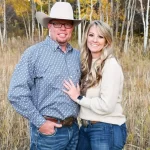
The Idaho Rancher's Wife

The Ranch From the Wife's Perspective

  • Home
  • Blog
  • Workshop
  • About
    • About the Rancher’s Wife
    • Meet our ranch family
    • The Ranch
  • Contact

Doing Scary Things- Ranch Wife Style

February 18, 2025 by admin

The comfort zone- a place of ease, perceived control, and little stress.  Let’s be honest, we all want to operate inside our comfort zone where we can keep anxiety at bay, feel confident, and know what we are doing.  We fear failure so we ensure success by only doing those things we have already done.  But experience teaches that the most growth and learning happens when we step outside that comfort zone.  Eleanor Roosevelt once said, “Do something everyday that scares you. These small things that make us uncomfortable help us build courage to do the work we do.”  

Life on the ranch tends to give us all plenty of moments outside our comfort zone that we can either embrace and learn through or shy away from and stay stagnant.  I’ll admit that embracing those moments feels especially hard when my failures are out on display for so many others to see.  It’s ok for my growing children to learn from failure, but as a grown adult, I too often feel like I should just know, well… everything.

Just last week I took the opportunity to do something new and outside my comfort zone.  For some, this might seem like a simple daily chore but for me, it was a whole new experience- feeding cows solo.  Now I go out and help feed often, sometimes daily.  I know the routine, what to feed, how much, but I’ve always been the crew that opens the gates, cuts the net wrap off and such.  

What I haven’t ever done is be the guy in the tractor behind the wheel.  If we had to choose between my very capable husband and myself in the seat, we choose him because we want to get the job done and move on.  And, really, why should I do it when he is there?

Eventually the day rolled around when all of the usual feeding crew were gone.  The roping that was supposed to get done with plenty of time for the ranchers to get home and feed, went long, lending to one of two possibilities.  Either they would have to feed late after getting home or I could jump in and try to do it myself.  I pulled on my big girl coveralls and jumped in the tractor seat, sure that I could feed three bales of hay without disaster striking.

There were a few things I knew I had on my side as I set out- first I had the basics of tractor mechanics down so that I could drive faster than at a snail pace and move the loader in all the necessary directions.  Second, if I had questions, FaceTime put me just one phone call away from help.  And third, cows don’t care how pretty the feeding is, they just want the hay out.

Getting to the stackyard I found the right hay, and through a little trial and error, managed to get a bale on the forks and grab one with the three point bale squeeze on the back.  It wasn’t as smooth and easy as when the guys do it, but I was doing it.  I headed up the hill to the hungry heifers, planning in my mind how I was going to go about feeding.  I would set the first bale down, cut the wrap off, tip it over, send it rolling down the hill and that would keep the cows out of the way while I put the other two in bale feeders around the pasture.  Easy enough.

Everything started off according to plan until it was time to send that bale rolling down the hill.  What seemed like a simple little push with the forks was hardly so and because it was taking longer than usual, the cows were now starting to get in the way.  To complicate things even more, it was suddenly dark outside.

I was definitely outside my comfort zone, but also so in the thick of what I was doing that there was no quitting.

Scooping up the bale I had intended to roll down the hill, I put it in the first feeder and opted to try again with the second bale, learning from my earlier mistakes.  It took a little trial and error but bale number two was finally rolled out and the cows were content to leave me alone while I fed the last bale.

Heading to the feeder, I saw that it was on a hill and while I might be in a tractor, I had better be smart about how I went about getting there.  Between the snow and mud, the hill was slick and in that moment, a distinct memory of a teenage girl failing to turn a tractor up a muddy hill came rushing back to me.

Putting the tractor in the low, snail pace gear, I carefully headed down the hill, making sure I had a clear plan out of there after dropping my load.  All seemed well as I made my way to the feeder until I stopped the tractor to pull off the net wrap and noticed the tractor continued to slide.  I quickly turned the wheels and that was enough to keep it still.  I knew I could dump the bale but I wasn’t sure how I would get out of my predicament once I straightened out again.

Four wheel drive.  That was the solution.  I really should have thought of that before heading down the slippery hill but at least I was thinking of it now.  The only problem was that of the millions of buttons, levers and switches, I had no idea which to toggle.  And I was sure that the wrong one would probably make the whole tractor implode.

Mustering the courage to make that phone call that admitted a bit of failure, I called my husband and asked for help.  Without laughing at my mistakes or making me feel even more dumb than I already felt, my rancher easily helped me get out of my sticky situation.  I dropped the last bale, skirted around the feeder, and headed for home quite proud of what I had finally accomplished that night.

For some, this was a simple chore, something they could probably do with their eyes closed, although I don’t recommend it.   They made it seem easy but as I went through the very steps they did, it seemed so complicated and almost dauntin.  I hope you chuckle about this little ranch wife willing to help even when the job is outside her comfort zone.  But more importantly I hope you learn a few lessons from her.

Learn that you can accomplish far more than you think you can.  You just have to try.  New things are hard and scary- they are supposed to be!  But, trying, jumping in with both feet is the only way to grow.  Learn that people are here to help you.  Asking for help isn’t admitting failure, even though it feels like it.  Learn that the only real confidence in life comes from conquering those moments of fear, big or small.  I might not be on the “A team” when it comes to the feeding crew, but if the job needs doing, I know I can do it.  Next time, I just might have to start a little earlier and find the four wheel drive a little sooner.

A Heartfelt Thanks to a Rancher

November 21, 2022 by admin

Thanksgiving week is often the pinnacle point of heartfelt gratitude.  The holiday helps us to slow down and take time to see all of the goodness in our lives.  We give thanks for the families around us, the homes and careers we have, the opportunities for growing and learning and the many luxuries we have that we surely take for granted.  

High on that list of thanks should be the farmers and ranchers that help feed families around the world.  This may seem like an obvious choice but I wonder how many people actually realize that without the backbreaking work of the agriculture industry, their thanksgiving would look very different.

From the turkey at the center of the thanksgiving table to the stuffing and corn and mashed potatoes and even the sweet potato souffle, it all began in someone’s field.  Those tasty rolls began as a small wheat seed that was cultivated, harvested, milled and prepared into the flour you used to make great-grandma’s best ever roll recipe.  That sweet whipped cream started at the dairy and made its way to the shelves for you to whip up for a tasty pie garnish.  That beautiful garden salad is brought to you by the row crop farmers tending their lettuce, carrot and onion fields, just to start.     

There isn’t a single bit of Thanksgiving dinner you could have without the management and stewardship of farmers and ranchers. No, I take that back.  In this day and age there are plenty of synthetic food alternatives and imitations that you could choose from.  But synthetic foods only imitating the real flavor of a savory plate of meat and potatoes could never compare to the real thing.

Besides thanking farmers and ranchers for the foods you get to enjoy, not only on Thanksgiving day, but every day, we owe them a thanks because without them, there is so much of life we wouldn’t enjoy.  Imagine if you can, a world without large operations growing masses of food products to sell around the world.  Imagine what life would be like if you were responsible to grow and provide all of the food that you and your family would eat.

Tending to animals and crops, harvesting the meats and vegetables, processing the farm products into kitchen ready goods would be all consuming.  Think back to our pioneer ancestors and the time they gave to butcher their own animals, church their butter and grind their wheat.  If we were completely dependent on providing all our own foods we would either have very little or spend all our time growing it.

With advancements in technology came great improvements in agriculture that allowed farmers and ranchers the capacity to take on more crops and more acreage to feed more families than just their own.  As people could purchase foods, it in turn allowed them to use their time and energy in other ways.  People could follow their dreams and new ideas, whether it was an exciting career, traveling adventures or enjoying the arts.

Today we have celebrities, stars and popular figures that do very little to provide for themselves, but rather spend all their time entertaining us.  Around the world are presidents, leaders and dignitaries that work to make our countries safer to raise our families.  Our children have chances to learn more things in more ways than our forefathers could have ever dreamed of.  And all of these opportunities and more are afforded to us because we have an agriculture industry that takes on the responsibility to feed the world.

This week as you count your blessings and all the good you have, remember that so much of it comes from the good men and women that labor in fields across the world.  They deserve your thanks in so many ways.

A Rancher’s Part in Fighting Wildfires

September 23, 2020 by Allison

The Rancher is on our local fire department and a casualty of his love for fire is that I too have learned a lot about fire.  This time of year we talk A LOT about fires, where the hot spots are, how fast they are moving, destruction they cause, and all sorts of enlightening insights about firefighting that I never knew.  There is always one thing that we come to-

Fire is really complicated and really simple.

The complicated part is… obviously… complicated… and not what I want to get into here.

The simple part is this.  Fire needs three things- oxygen, fuel, and an ignition.  Obviously, there is no way that in a wildfire we could ever contain or control the fire’s access to oxygen.  In some ways we can or can TRY to have control over the source of ignition.  We can try to be smart about camping with  fires, sparks from shooting or exploding targets, controlled burning and fireworks.  But sometimes people aren’t smart or despite their best efforts, things get out of control and fires happen.  Even if we could put a stop to all fires started intentionally or unintentionally by people, there will still always be a chance of a natural fire starting.  In our area, most wildfires are started by lightning.  

We are forced to admit that we can’t completely control the ignition source.

Fortunately it’s a different story when it comes to fuel.  Fuel in the path of a wildfire, grasses, brush trees, cannot be COMPLETELY taken out of the picture, but it can be significantly reduced.  Actually, it’s the best option when it comes to being able to prevent or control a wildfire. 

Now begs the question, if we want to try to limit the fuel in the path of the possible wildfire, how would we go about it?  Honestly, I think we already know a handful of good and useful practices that have proven themselves in the past that we really need to take hold of.  My first answer is grazing.  Graze the fuels, grasses and weeds and brush and whatever else we can, to keep them at a manageable size.  Cattle, sheep and goats have proven that their grazing rangelands can decrease potential fire fuels and slow the spread of wildfire.  Grasses are the fastest and easiest means for a fire to spread.  

Grazing the wild lands and ranges is actually a pretty terrific win-win. The cattle have good feed on the range.  It’s true, it’s a great win for our ranchers.  But the other winners of this deal are practically EVERYONE else.  Because reducing fuels, reduces a chance of fire  or at least helps keep fires smaller and easier to put out, and doing that keeps our skies clearer, air cleaner, and wild lands safe and beautiful for EVERYONE and ANYONE to use. 

Doesn’t that sound like a win-win?  And isn’t that a good thing?  Even, a GREAT thing?! 

Recently I watched a fire on our own rangeland.  On a hot, dry August day with dry lightning in the forecast, it was no surprise that a wildfire started.  This area of the range was rocky, spotted with cedar trees, and had been pretty well grazed by our cattle.

As I watched the progress of the fire, I was sort of in awe of its power. The fire was terrible and, honestly, incredible to see how it moved.  It was just like watching water from a ditch move across the ground.  It never was deterred.   It never slowed.  It never hesitated.  Anywhere there was a path for it to go, it went.  The areas with taller, thicker grasses were the places that it burned with greater vigor.  But in those places that the grasses were grazed, it slowed, giving the firefighters more time to gain control.

My experience isn’t the only one out there that demonstrates the benefits of grazing when it comes to wildfires.  Over the last few years, California has been devastated by rangeland fires.  In May of 2019 there was a wildfire near Los Angeles that threatened Ronald Regan Presidential Library.  As a means to protect the library, they contracted with a local goat rancher to come in and graze down the area to reduce the fuels.  The fire came in raging but slowed to a crawl once they came up on the grazed area.  In fact, the firefighters said that slowing the fires was key to giving them enough time to get ahead of the fire and save the library.

There is a lot of push back for grazing.  A lot of people feel that grazing is disruptive to the course of nature both because farm and ranch animals don’t belong on wild lands and because it is trying to control nature rather than allowing it to takes it own course and should be left alone.  True, grazing can seem somewhat invasive.  And that can be considered a real bummer.  But we have seen that the fallout of wildfires is more destructive than any grazing herd could ever cause, not only to the land but to communities and families near and far.  Something even more terrible comes when we don’t take proactive measures like grazing.  Mother Nature’s answer to fires is to let it go.  Let it go until it either runs out of fuel (which means that it has burned EVERYTHING in its path up) or it has come upon a natural fire break. 

This may have been ok hundreds and hundreds of years ago but this isn’t a suitable option anymore.  As cities, businesses, and interests have changed and developed our communities, businesses and homes have spread across the country and many are now in the paths of wild fires.  Not stopping fires and not preventing them allows too much devastation.  A totally hands off approach to taking care of our wild lands may seem like a good option to keeping nature natural, but we have a greater responsibility to provide a safe place for people to live, work, play and raise their families.  In fact NOT getting rid of the fuels that we can seems like we are setting ourselves up for disaster.  Is it too bold to say that it seems irresponsible or even reckless to let those kinds of things go without being maintained?

Fire is really complicated and really simple.  The simple part is that we have means to reduce the devastating effects that come as a result their unrelenting power.  Grazing can play a big part in protecting the beautiful country we are all blessed to live in.  While there is so much we CAN’T do to prevent fires, there are some things we can do.  Let’s do them.

Beef. Its Your Choice

April 4, 2019 by Allison

It won’t surprise you to hear that I love beef.  Beef of ALL sorts-  I love a good burger, some yummy smoked tri-tip, pulled brisket, a chicken fried steak, a thick juicy sirloin steak, or a beef fajita.  I don’t love beef just because it tastes so good or because we raise our own, but also because it is good for you.  Really, really good for you.

Does THAT surprise you?

There are so many different voices telling consumers that beef is bad.  Red meat is bad.  Meat in general is bad.  But I don’t think so.  If it was I wouldn’t be eating it and certainly wouldn’t be feeding it to my family. 

For a minute I am going to get all nerdy on you (I’ll admit it… gulp… I’m a nerd).  Lets quick chat about all the good that is in beef.  Beef is seriously loaded with all sorts of goodness.  It is a significant source of 10 essential vitamins and minerals (protein, zinc, selenium, niacin, vitamin B6, vitamin B12, phosphorus, iron, riboflavin and choline).  In one serving of beef (3 oz) you get at least 10% of what you need daily of these 10 essential vitamins and minerals in less than 10% of your daily recommended calories.  I could go into more detail (and will if anyone is interested) of how and why your body needs these nutrients.

Now, if you wanted, you could say, “Hey, The Rancher’s Wife, I can get all of that from other sources of protein.”  Yes.  You can.  And its totally fine if that is the way you want to go.  But you should know that in one serving of beef you get more and more complete nutrients in half the calories as you would in other plant based sources of protein.  So in essence, you get more bang for your buck. 

Beef is also a good source of the healthy fats that we need in our diet being considered one of the best sources of monounsaturated fats.  That’s the same kind of healthy fats that we get out of avocados and olive oil!

Yes, beef is healthy! 

All beef.

Grass fed (which most cattle spend the majority of their life on grass), grain finished, organic, and natura are all types of beef that WILL have these all nutrients.  The beef from all the different ways the cattle are raised WILL be a benefit to your diet.  Whether the cattle have been finished in a feed yard, given antibiotics when it was sick, or raised on a meadow and never doctored, IT IS ALL GOOD. 

And leads me to my final thought…

It’s all your choice.  To eat beef or to not eat beef.  To have grass or grain finished beef.  To have organic, all-natural, dry-aged, home grown, or whatever other options are out there! It’s all up to you.  I’m not here to say that you HAVE to eat beef or that it will miraculously change your life (Ok… the yumminess may change your life, especially if The Rancher cooks it up for you!).  What I’m here for is to give you the information you need to make a good choice for your family, to tell you that it is a great, healthy option for you and your family and for you to know that my family is here doing our best to give you a product you can be proud to serve your family.

Running Cows on the Range for You

January 31, 2018 by Allison


Our ranch couldn’t operate without running on public lands.  We would love to run our cows totally on private land but that just isn’t doable right now.  Don’t get me wrong, the range land that we graze on is really, REALLY great.  Our cows come home fat and healthy.  But it would be nice to not have someone to dictate where and when we can run our cows.

Remember the days when we didn’t have to answer to anybody about our cows out on the range?  Ya me neither… Mostly because I haven’t been around this operation very long.  But also because even if I had been around here my whole life, the range has been regulated for longer than I was alive. 

When the first cows were grazing out on this range, nobody owned it.  It was just leftover land from when the railroad had been built.  Cattlemen would take their cows to Curlew Valley to graze through the summer months and then head south to Locomotive springs to winter.  It ended up being a conglomeration of all sorts of cattle and brands, which may seem crazy but it worked out well.  Between all of the cowboys there was always enough help to get all of the work done- water kept up, the cattle checked, and all the ground covered.  In the spring they would help brand each other’s cattle and in the fall they would all gather in and wean the calves.

Over time and from experience, they established good patterns of grazing, making sure that they wouldn’t over graze the land and have something available when it was time to come back.  They let the seasons and weather dictate how and where the cattle would be, flowing with range and its needs.

These days we still run our cattle the same, just with a LOT more direction from the higher ups.  We still run in an association, with most of the original brands that we began with so many years ago.  We still help move cattle, brand, wean, and check water just like they did in the past.  But now we are on somebody else’s schedule.  They tell when to turn out, how long we can stay, and where we go next.  The dates are rigid and there is no flexibility to work with what the range is giving.

I really have mixed feelings about this.  I think it is smart to have organization to it.  We want to ensure that the range is healthy for our cattle to feed on so it is important to make sure that we don’t have too many cattle or spend too much time in one area.  But at the same time, having someone from behind a desk telling us what we can and can’t do, especially when they don’t understand cattle or the work it takes to run them, is frustrating.

The job gets even harder when there are special interest group trying to keep you from your range land.  There are all sorts of reasons that they don’t want us on the public lands.  They think that we are harming the land.  They figure it needs to be left for the public to use for recreation.  They want it preserved for wild life.  Or some just don’t want it used at all for any purposes. 

Right now, we aren’t in a position where we are being troubled by anyone directly, but we aren’t excused from the fight to get cattle off of public lands either. 

I’m the kind of girl that is all about being efficient with what we have.  I’m pretty sure that it’s in my genes.  I hate to see things go to waste when there is so much value to be had.  But I also don’t want to use it all up at once.  That’s being wasteful too.  There’s that sweet middle ground that should keep from wasting by keeping things from totally unused but also keeping it from being over used and ruined.

But how can we apply that to the range?

It’s all a balancing act, friends.  Its working to keep too many cattle off too little ground with too little feed for too long.  But it is also having cattle out there to disturb the ground to help new seeds to grow, to cultivate the ground, to carry seeds in their poop and fertilize them to grow.  Its having cows out there to eat the grasses and keep the fuels down so fires don’t devastate the range.  Using it for cows keeps it as usable, profitable range land and not the next development area for a new subdivision.

Balance.  That’s how we do it.

A few years ago, I saw a book that was talking about public lands and it was obviously against ranchers using it for their cattle.  In fact, there was a caption in big bold letters that said something to the point of “keep ranchers from turning your land into a feed lot!”  And right next to it was a picture of an area that had been overgrazed (most likely it was right next to the water trough, right?!). 

It was a little like a punch to the gut.

Is this what people really think ranchers do?  Do they assume that we use public range land to feed our cattle so that we can make some money by fattening our cattle while we ruin someone else’s land?  I just wanted to shake someone, anyone, EVERYONE and say, “WE DO THIS FOR YOU!”

We run and raise cattle for people to eat.  It’s plain and simple.  Yes it is our jobs and we are trying to make money doing it (enough to survive at least… ha… ha…).  But at the heart of it all, we care about making a good, affordable product for families to put on the table using the resources available.

For years and years, nothing has changed how ranchers use the range.  But what has changed, is the public’s perception of how and why use the land.  Their land.  The bigger picture is that we use their land to raise cattle to feed their families.  And we have before it was really anyone’s land.  The cattle were there long before any interest groups even existed, let alone had an agenda. 

We are going to keep running cattle out on the rangeland for as long as we are able.  We are going to keep using that land to keep our cows healthy and we are going to keep using our cows to keep the land healthy.  And in the end, you, that eat our beef, will stay healthy too.


The Idaho Rancher’s Wife Braves the Stage

November 17, 2017 by Allison


True to my word, here I am, telling you about my experience speaking at the ICA Annual Convention.  I’m still in shock that people wanted to hear from me and ask questions about what I do.  I’m also a little in shock that I am posting twice in one week!  Maybe this can become a regular thing….

Tuesday I was part of a panel to speak on different forms of advocacy and just briefly describe the how’s and why’s of doing it.  Speaking out about ranching and trying to connect with people is become really important these days.  It is easy to become disconnected from the things that keep our world running whether it is knowing where our food is coming from or how the plumbing in our homes work. 

While I was there to talk about how I reach out through blogging, there was another woman, Cheyenne Smith, there to speak on how she is apart of the ranching and beef conversation through twitter.  I was really impressed how she wants people to care about us as ranchers and as people providing food for families.  By sharing the tidbits from her everyday life, she helps people really see what ranching is like.  If you are tweeter (is that even a thing?), go find her @JLazySAngus.  Not only does she have great insight to ranching, but she has a great network to be a part of.

The other presenter on our panel was Matt Brechwald and how he goes about advocating really impressed me.  A little back story…  After college, he ended up living and working in the city.  Eventually, he realized that he was not happy with where is life was taking him.  So, he and his wife found some land that they could relocate to and start their own ranching experience.  In order to make ends meet, he used his skills, machinery, and tools from the ranch to create a side job.  As he was out working one day, he realized what an awesome thing he had been able to do and how he needed to share that.  He started doing podcasts, highlighting his journey to what he was doing and how others could do it too.  To find more about his story and his podcasts you can go to his site at www.offincome.com.

It was really a great experience sharing the mic with these people and helping to share the importance of advocacy, why we love it and how others can do it too.  I’ll admit, I was so nervous to begin with.  And through most of it… In fact, there was one point that the moderator asked me a question and I was in the middle of answering it with one of my stories.  And all the sudden I realized I couldn’t remember what I had been saying and couldn’t even remember where I was going with it.  Haha… You can laugh at me… I am!  Once we were done with our two 25 minute session I was finally relaxed enough that I felt ready to start.  Pretty unfortunate that it was all over, huh? 

You are probably thinking that I am last person that should be telling other people to get out there blogging because I struggle in this realm myself.  I can be inconsistent and unreliable, and that is a hard pill to swallow.  But yesterday I realized that what I do have is that I keep coming back to it.  This experience may have been more important to me that for anyone else because it reminded me why I do this.  And maybe now I have recommitted myself with new a new drive and hope for what I can do here in this space to reach out and advocate for something I believe in so strongly!

Hey From the ICA!

November 14, 2017 by Allison


I’m writing to you from the snow-capped mountains of Sun Valley, Idaho!  Actually, they are more like snow dusted but it sounds more exciting the other way…  But I am sitting here waiting for my baby to fall asleep and thought I would take a minute to come talk to you!

Every year we take off this week to be a part of the Idaho Cattle Association’s annual convention.  It’s partly because it’s the closest thing we get to a work trip but also because it is a terrific place for a cattle producer to get a little extra help. Here’s why…  ICA is an organization created to support cattle ranchers at the grass roots level and take action wherever and however it is needed.  Ranchers are busy keeping up with all the problems at home- fencing, feeding, calving, haying, ect., that they don’t have time to face the big picture ranching problems- fighting public lands issues, water rights, endangered species stuff, ect…

A few years ago, the government was attempting to regulate what work kids could do on the ranch.  They were claiming that kids were too young to operate tools, machinery and work with animals.  Yes, it may be surprising at how young our kids do start working on the ranch but when they are totally immersed in the lifestyle, its actually more of a challenge to keep them from helping!  My seven year old son BEGS to help chase cows and rides a horse for hours.  My four year old daughter stood by the chute for hours loading the tagger for her dad because SHE wanted to.  Kids learn by watching, so naturally, ranch kids learn quickly how to do the work that they see happening all around them. 

It was organizations like ICA that were able to stop the regulations from actually becoming reality.  They knew what we needed as ranchers and, more importantly, they knew what to do.  They have the contacts, the research, the lobbyists, the time and the knowhow. 

The ICA not only advocates for ranchers against those that try to tear down the industry, but they do a lot to promote beef and keep ranchers up to date with the best minds, technology, and resources to keep ranching efficient and up to the demands we face.

Aside from getting a little vacation and a little knowledge, this year we have a few different reasons to be here.  One- The Rancher has been asked to be on the ICA board to represent our area.  He is a little nervous but also excited for the opportunity for a little growth.  The second reason we really needed to be here is that I get to present on my blog and you!

Did your jaw just drop?

Ya mine did too when I was first.  Before I knew it, I answered yes and then I thought, “Um… do they know who I am?  Do they know how little I really know about this?”  But none the less, I am here ready to present tomorrow and pray that it all goes well. 

I’ll be sure to update you when I am done…  Wish me LUCK!

The Curlew Cattle Association: A History of Belonging

June 3, 2017 by Allison


A few months ago I was asked to write a story for the Line Rider, a magazine published by the Idaho Cattle Association.  The story they asked me to write was a little closer to home than most of my other stories.  They asked me to write about our history with the association we run our cattle in.  Since it wasn’t my family that I was writing about but rather my husband’s, I had to do a little research.  It was interesting and exciting and inspiring.  It ended up becoming somewhat special to me that I could write about my husband’s family and share their story.  And I wasn’t the only one that felt this way.

Over the last few months, I have had several of the cowboys and ranchers that we work with mention the story.  I’m not sure why, but I was really surprised with how much they all loved it!  Maybe I’m still a little surprised when people (besides my momma and my husband… they are obligated to cheer for me) think that what I write is something worth reading.

Because of all their applause, I thought I would share it with you!

Ranching can be a tough and demanding lifestyle but with people working around us facing the same challenges and striving for the same goals, we find a collective strength.  In fact, it is through the practice of leaning on each other that several ranches in the Curlew Valley have found success amidst the struggles of ranching on the range.  Their association of working together began as their ranches were founded. It was long ago that August Eliason learned that the demands of range were easier to manage has he harnessed his efforts with those around him and still to this day, his descendents continue to follow his practices of working together.
August Eliason came to America from Sweden with his family as a young boy at the age of 9.  At the age of 14, he decided to go out on his and found a job working for the Bar M Ranch, hiring on as the ranch foreman.
 The Bar M Ranch began after the construction of the trans-continental railroad through Utah.  A wealthy railroad baron from San Francisco had seen the boom of cattle empires in the west and he wanted part of it.  He saw an opportunity to buy up the available land left from building the railroad and purchased the land from Connor Springs to Kelton, Utah, approximately 365,000 acres.  Soon after, they bought their first 2,500 cows and they were in the cattle business.   They continued to acquire land and cattle as they bought out other operations, bringing their numbers up to a herd of 45,000 cows running throughout northern Utah and southern Idaho.  Unfortunately, the owner of the ranch and his managers had no experience managing a cattle herd.  Their lack of knowledge ultimately set the ranch for failure.  
As the foreman of the ranch, August was responsible for grazing the cattle throughout the Curlew Valley.  Through managing so many cattle over so many miles, August developed a great talent for overseeing the cattle and land.   The cattle grazed the range for feed year round, often overgrazing it.   The operation never purchased or put up any additional hay, and the cattle were left to forage on what little feed was available during the winter months.  This mismanagement proved detrimental for the ranch.
In 1888, the blizzard of a lifetime came through.  Heavy snowfall and extreme winds caused the cattle to stray as they followed their instincts and walked with the wind in attempts to stay warm.    With nothing to stop the wandering Bar M cattle, they walked for miles and miles.  With such terrible storms, August and the other cow hands knew there was nothing they could do.  They knew they would never survive searching for the cattle in the storm over the snow covered range.  All they could do was wait and see what the outcome of the storm would bring.
Eventually they found that from the combination of exhaustion from the walking and the lack of feed because it was buried beneath the snow, the majority of the cattle had died.  Accounts recall that there were so many dead cattle across the land that you could walk for miles stepping only from one cow to the next.  When spring came, they found 35,000 dead cattle wearing the Bar M brand.  The numbers of surviving cattle are somewhat unknown, anywhere from 10,000 to only 800.  
The Bar M Ranch never recouped from the devastating winter and was disbanded shortly after.  The cowboys were left to fend for themselves.  But what was the end of the Bar M Ranch was the beginning of several grazing organizations in the area, such as the Curlew Valley Horse and Cattle Association and the Black Pine grazing group.  
It was rumored that August and his two brothers-in-law, Andrew Anderson and Ed Showell, gathered up any unclaimed and unbranded cattle to start up their own herds.  They continued to winter the cattle in Locomotive and graze north through the Curlew Valley, similar to how the Bar M Ranch managed their cattle.  It was hard work but with their experience on the range, their desire to succeed and their strength by working together, they facilitated their own beginning. 
At the time, ranches from all over northern Utah and southern Idaho would turn their cattle out on the public rangeland.  There were no boundaries, no regulations and no expectations grazing on the open range.  All the animals roamed free, fending for themselves where ever it may be. Because of the water and good feed, most cattle would migrate south to Locomotive Springs.  At the end of the grazing season, everyone would work together to gather in the cattle to sort and take to their home ranches.  
In addition to running on the public lands, August and the others also homesteaded land in Idaho. They were successful on their homestead land in Stone, Idaho on what was called the North String.  There he set up headquarters for his ranch and his family.  August had 6 children, including his two sons, Bert and Chester, who took over the ranch at his untimely death when they were teenage boys.  
Even though they were young, the boys were able to successfully run the operation for their mother with the help of their uncles, Andrew and Ed, keeping both the ranch and the family alive.  The time came that they decided to buy the ranch and their partnership began.  It took time, but they were able to add cattle to their herd and land to their operation.  
The Curlew ranchers recognized what an asset Locomotive was for cattle, although most of the area was deeded up to homesteads.  But over time, the flies and sickness of the wetlands caused most homesteaders to sell out, an opportunity Bert, Chester, Andrew, and Ed jumped on.  In addition to wintering the cattle in Locomotive, they decided to hay the land as well.  Once a year, they worked together to carry out the very labor intensive job of mowing, raking, pitching and stacking the hay.
Over the next several years, many things would happen that would bring more organization and need for the association.  In 1934, the Taylor Grazing Act was set in place to regulate the use of public lands.  Throughout the country, drought and poor management of the land had caused severe losses that devastated the farming and ranching industry.  In Idaho and Utah, cattle and sheep ranchers would graze an unrestricted number of animals that overwhelmed the rangeland.  With the Grazing Act, those ranches already running animals had to apply for permits.  With the homestead land in Stone and Locomotive, the men were granted permits to continue running their cattle on the public lands of Black Pine of Idaho and Wild Cat/Cedar Hill of Utah.  
Every season had its challenges, but Bert and Chester managed to find success.  A large part of their success was working hard, but an even larger part was working smart.  With their operation being divided over so much land, it required a lot of time and labor to manage it all.  The men would spend days on the range haying and moving or tending cattle.  By working together, it made it easier to ensure that everything was be done and looked after, without having to hire additional men.
Shortly after the depression Chester had the chance of a lifetime.  Dave Dilly was ready to sell the piece of land that Chester had wanted all of his life- the Rockhouse Ranch, famously named for the house made of rocks that provided protection from the Indians in the 1860s and later used as northern headquarters of the old Bar M Ranch.  Living just a few miles away in Stone had given him plenty of opportunities to see its potential. 

Dave Dilly, Chester’s uncle, first offered the Rockhouse Ranch to Bert but with Bert declining the piece, it was Chester’s for the taking.  He sold his home, land, and half of the company property to Bert and moved his family and his half of the cattle 14 miles north to their new ranch in Holbrook, Idaho.  Starting his own operation had been a longtime dream and he was excited for the opportunity.  He continued to run things alongside the others in Stone and to run his cattle on his portion of the rangeland permits.

Running separate, but parallel operations was very profitable for the two brothers.  They were both able to grow their operations and later pass them on to their own families.  Bert had two sons, De and Bert Jr., which in the end inherited his cattle and land.  De stayed on the homestead in Stone while Bert Jr. began a new operation in Snowville, Utah.  With his portion of the permits he continued to work alongside his brother, until De sold his operation.  Bert Jr. ‘s operation, known now as the Eliason Ranch, was owned by his son Dave Eliason, who just recently turned things over to the next generation- his son, Shane.
Dave enjoys the same benefits of running cattle in the association that his grandpa did.  Dave says, “The greatest benefit is that we can share the labor without having to hire extra men.  We all have large enough herds that we couldn’t do it alone.”   
The Rockhouse Ranch, now known as Eliason Livestock, is managed by Ken Eliason, the third generation to run cattle in Holbrook.  His father, Don, was just a boy when Chester began ranching in Holbrook.  In his time, he watched the ranch develop from a small operation to a thriving family business.  With the goal in mind of keeping it a thriving family business, Ken’s oldest son, Brayden has returned to eventually take over the ranch someday. 
While time and innovation has changed how things are run from day to day, Ken and Dave still employ the same operational practices that the original Curlew cowboys did.  They still winter the cattle in Locomotive with the Anderson and Showell operations.  They work together to wean, brand, move cattle, preg check cows, and check water. 
Working together with so many different operations can be challenging but these men have made it work.  While they have seen similar groups fall apart by disagreements, they have found a way to keep things beneficial to all.  Ken says that the best thing about the association, and how they have continued working together for so long is because of the trust.  “You know that you can trust that they will be there to get the work done and that they will do a good job. You can trust that they have your back.”
Running together in the association has proved to be a successful practice for everyone in the Curlew Valley.  They enjoy the same benefits that the old cowboys did- the autonomy to run their operations but still have the man power to get the work done.  But the benefits go beyond the obvious.  Each man in the association a niche- his strengths that the whole group can rely on.  It may be the equipment and skills that he has or the “in” for a good deal on salt block.  Some have their finger on the pulse of what is happening in the cattle industry across the country and some have the relationships and contacts for more support and information.
 
Helen Keller once said, “Alone we can do so little. Together we can do so much.”  The ranchers of the Curlew Valley have been the embodiment of that phrase for so many years.  Alone, one ranch could never have accomplished what has been done. They would have succumbed to the hard reality of homesteading and the fatigue of the rough range. But together they have advanced the industry, produced cattle, improved the land, raised families and strengthened communities.  With the help and support of one another they will continue to do so much. 

Weekends at Locomotive

March 17, 2017 by Allison

One of my weekend highlights is always heading down to Locomotive.  There is something about the wide open and empty range that soothes my soul.  And maybe its just because I love getting away from the house work and cleaning, but I’m pretty sure its more than that.

Working down to Locomotive isn’t anything crazy exciting.  We all pile in the gator and drive around checking the water and cows.  We tag a few calves here and there and we make sure every baby has a mama.  Until the snow melted, we took some time to dump a little hay around.  Every once in a while we find a baby that has been abandoned, usually they were a twin, and we bring them home to the ranch with us.  After we give everything a good once over, we load up and head home.

See?  Nothing crazy.  But I love it!

I love it when my kids get to spend time with their dad.  What better way to learn how to be a rancher than to see their hero do it.  They ak question, jump in to help, and soak it all in.  Its a chance that they have to disconnect from the world that is happening around them.  Even as little as they are, they can still get sucked into the tv and computer and what not.  But when they are out on the range, they are in a whole different world of their own making.  In seconds they can find adventure.

I love it that we can go somewhere and its almost like time stops.  The rush and hustle of life just disappears.  That is something precious when you are a mom that lives by a never ending to-do list that keeps you hopping from job to the next.  Somehow, the list doesn’t matter out there.

I love it because we can just be ourselves.  There is no judging that I didn’t put makeup on that day.  In fact, if I did, it would only get covered with the layers of dust so no one would see it anyway!  The cows don’t care what clothes you wear.  They don’t care how rambunctious and rowdy the kids are.  We can just rock it how we like to!

Everyone needs a place like Locomotive.  Somewhere that they feel safe and at peace and totally confident.  Somewhere that provides a little perspective when we get so consumed with what keeps us going from day to day.  Somewhere that when we go home, we feel a little stronger and ready to take life on again.  

In this crazy world, that can be hard to find.

Where is your “Locomotive”?

Hello! I'm Allison, The Rancher's Wife! There's nothing I love more than being out on the ranch with my husband and kids. Join me for a look at what goes on here at the ranch and the life being a rancher's wife!

  • Bloglovin
  • Facebook
  • Instagram
  • Pinterest
  • Twitter

Follow by Email

Recent Posts

(no title)

This branding day looked a … [Read More...]

Peterson Place: Our Desert, Our Branding Day

Peterson Place branding day … [Read More...]

BLM Branding Day: New Ground, Same Work

Every Saturday of April is … [Read More...]

Back at the Ranch: Lookout Livestock Branding Day

Most branding days we’re up … [Read More...]

Branding, Chaos, and Cattle: Season Kickoff on the Ranch

There are days we look forward … [Read More...]

Categories

Newsletter

Leave us your email to more from your favorite ranch family!

Follow Allison Eliason's board The Rancher's wife on Pinterest.

Archives

About Me

Hello! I'm Allison, The Rancher's Wife! There's nothing I love more than being out on the ranch with my husband and kids. Join me for a look at what goes on here at the ranch and the life being a rancher's wife!

instagram

theidahorancherswife

Idaho ranch wife + mama 🐮🤠
Living on cattle, cocoa & kids running wild.
Daily ranch life, western style all with a side of dirt.

Rocky Mountain Oysters… The delicacy of branding Rocky Mountain Oysters… 

The delicacy of branding day that no one partakes in, usually. 

There’s always a few castrated bits grilling on the top of the branding box and, I’ll admit that they smell delicious. In order to feel like a true cowgirl, I once indulged and it wasn’t bad. But I just can’t really wrap my brain around eating more than just a taste. 

Tell me, would eat them? Have you? I want to know!

#lifeonacattleranch 
#marriedtoarancher 
#brandingday 
#rockymountainoysters 
#outontherange
I’m playing catchup on the website but photos from I’m playing catchup on the website but photos from branding over the last weekend have started dropping! 

Let’s just say keeping up with the actual work, the laundry it makes, feeding my people after, and chasing the other activities makes editing and posting photos challenging sometimes 🤪🤣. 

Stay tuned to TheIdahoRanchersWife.com this week for daily photo drops. You won’t want to miss anything from the ropers dragging calves in to the kids adding a little extra chaos. 
#lifeonacattleranch 
#marriedtoarancher
#daysofbranding 
#outontherange
#branding26
What a crew! This posse willingly signed up for th What a crew! This posse willingly signed up for the cold, dust, wind, bruises and hard work all for a chance to rope and a full belly. 

If we would have told them there was 100 more they would have happily gotten back to work. In this day and age are, that kind of attitude feels a little rare. 

We would never be able to do this work without them. And the best part is that these friends make it feel more like play than work. 

Peterson Place 2026 branding in the books. Thank you, to everyone that saddled up, dished up, and chatted it up.  See you next year!

#Brandingontherange
#lifeonacattleranch 
#marriedtoarancher 
#branding2026 
#cowboysatwork
Dust? What dust? 🤣 If there is one thing you can Dust? What dust? 🤣

If there is one thing you can guarantee out here on the range is plenty of dust. We keep praying for rain and have had little bits here and there, but not really much to amount to. 

Until the rains come we will keep doing our work the best we know how, which will mean eating a little more dust. 

#lifeonacattleranch
#marriedtoarancher
#cattleontherange 
#dustandmoredust
#cowboylife
I’ve loved ranching for as long as I can remember— I’ve loved ranching for as long as I can remember—though marrying my husband proved I still had a lot to learn about their way of doing things.

It’s been about 10 years since I got serious about roping, and only in the last 5 that it’s really started to click. And now I’m hooked!

Still learning, still improving—but fair warning: if I don’t get to rope, I will absolutely be in a mood about it… but I’ll do my best to keep it to myself.

#marriedtoarancher 
#lifeonacattleranch 
#BrandingDay 
#RanchLife 
#WomenWhoRope
Did you know we have been running cattle on this r Did you know we have been running cattle on this range for over 100 years? Even before these public lands were claimed as BLM, my husband’s great-great-grandpa raised cattle through these same hills. In fact, this large herd of cows still carries some of those same genetics. Of course there have changes through the years, but we try to do the same they did five generations ago- raise great cattle. 

#lifeonacattleranch
#marriedtoarancher 
#branding
#cattle
#ontherange
Rancher’s wife tip- consult calendar dates for any Rancher’s wife tip- consult calendar dates for any and ALL possible events, including your child’s birth day. 

On this day 16 years ago, my husband left our little college-town home to drive the 3 hours down to the family desert piece to brand. I instead went to my OB appointment where I was told to go directly to the hospital to deliver my baby. 

Nothing scary or concerning- both baby and I were perfectly healthy. But of course it had to happen on branding day.  I heard the sorted calves loud and clear in the background. And if I remember right, there was a small hesitation where I’m sure he considered staying to brand the first set of calves before coming to the hospital. 

Moral of the story- don’t have babies in branding season. It’s best to consult his calendar. On the other hand, birthing little cowboys into such chaos might be the key to them growing into strong, kind, and capable young men. 

Tell me I’m not the only one who has to plan life around ranch work

#lifeonacattleranch
#marriedtoarancher
#ranchlife
#brandingseason
#cowboylife
Photos from our first of many brandings are coming Photos from our first of many brandings are coming off the camera and hopping on my website. There are too many fun moments captured to claim a favorite, but here are a few. 

Check out the rest on TheIdahoRanchersWife.com. Direct link can be found in my stories and profile Linktree 

#lifeonacattleranch
#marriedtoarancher
#brandingontherange
#westernphotography
#cowboysandcowgirls
Headed down to the desert this morning and had the Headed down to the desert this morning and had the best day branding. 

Sunshine ✔️
Roping✔️
Great food✔️
NO wind ✔️
The best people ✔️

We kicked off branding season in the best way and I can’t wait for next week. 

Be ready for a photo dump and stories to come!! (Also, I had a chance to pull out my new telephoto lens for some fun photos today 📸)

#lifeonacattleranch 
#marriedtoarancher
#brandingseason
#brandingontherange
#cownoysandcowgirls
“Hello, Ladies,” said in a low, sultry voice. The “Hello, Ladies,” said in a low, sultry voice. The most subtle pick up line from the Old Spice commercials, of all places. 

We may be in the middle of dropping this years’ calves but that doesn’t mean we aren’t prepping for next year already. 

Bull turnout will be here before we know out which means we need to have enough herd bulls heathy, strong, and range ready to breed cows all summer long. 

For months we have been testing, doctoring, and buying bulls ready. With the last of them being delivered any day now, we will get everything branded, tagged and ready for their final inspection. 

There’s still a little time before turnout, but everything is lining up. Bulls getting ready, cows getting close…
And somewhere in the back of your mind, you can already hear it—
“Hello, ladies.”

#lifeonacattleranch 
#marriedtoarancher 
#bullsofinstagram 
#helloladies 
#ranchlife
You ever feel like you’re being watched while you You ever feel like you’re being watched while you work… ?😅
We had a full panel of judges today, watching every move we made, and I’m sure they were thinking things like “we’re watching you,” “why are you doing that” and “don’t mess this up!”

And honestly… they’re not wrong.

Because whether it’s giving a calf the little extra boost it needs, or raising a boy to step in, work hard, and figure things out—this stuff matters. It’s not always smooth, and we don’t always get it perfect, but it’s worth getting right.

The herd might have a lot more eyes on me, but it’s the eyes from my husband, my kids and the others that are counting on me. Good thing for a lot of love and grace!

Today I’m pretty sure we passed inspection, though. Jury’s still out. 🐄👀

•	#lifeonacattleranch
•	#marriedtoarancher
•	#ranchlife
•	#ranchkids
•	#judgedbycows
Dear Mother Nature, I’ve been skeptical of the we Dear Mother Nature, 
I’ve been skeptical of the weather and your intentions for months now. Could life really be this sunny and warm? 🥰🤔

But now that the calendar has actually flipped to spring, I’m feeling more confident and hopeful that this is here to last. 🥹

Now, that doesn’t mean you should drop snow on us just because I’m relaxing into it, although that still would be part of an Idaho spring. 🤪🤣

We could use a touch rain. The moisture we have had has done so much good but it won’t last long. 🙏🏻

As ranchers we put a lot of faith and trust in you to take care of us. Don’t let us down. Not there’s a lot we can do in revenge or anything 🫩😮‍💨🤣. 

Sincerely, 
A ranch wife pulling out the short sleeves and officially putting away the snow clothes. 

Ps- it seems like you always struggle to know how much wind to share our way. Please error on the side of too little. 

#lifeonacattleranch 
#marriedtoarancher 
#DearMotherNature 
#RanchLife 
#SpringVibes
Please tell me not the only one… I’m starting to Please tell me not the only one… 

I’m starting to realize I live in a constant state of being in the wrong place… while also being exactly where I’m supposed to be.

At a basketball game? Thinking about what’s happening on the ranch.
Out on the ranch? Thinking about the laundry, the schedule, or where I’m supposed to be next.

Turns out nothing on a ranch waits for you. Not the cows, not the weather, not the work.

And unfortunately, the rest of life doesn’t either.

I used to think if I just planned things better, I could keep up with all of it.

Now I’m realizing that was wildly… optimistic. 🤣🤪

So these days I just do my best to show up where I am, try not to think too hard about what I’m missing somewhere else, and trust it’ll all still be there when I get back.

(Some days I’m better at that than others.)

Give me an AMEN IF you’ve ever felt like you’re supposed to be in two places at once 

#lifeonacattleranch
#marriedtoarancher
#ranchlife
#womeninagriculture
#momlife
“Are you coming out?” Those have to be some of my “Are you coming out?”

Those have to be some of my favorite words.
Around here, they translate to I love you, for sure.

In this busy season of life, I feel pulled in so many directions—kids’ activities, service opportunities, community involvement, my dreams, housework… the list never really ends.

I’ll admit, I struggle with the balance of what I should do and what I want to do.
And most days, what I want is to be out ranching.

But because it’s a “want,” it can feel selfish.

But if he wants me out there working alongside him, then that becomes my priority.

He’s making space and time for me…
and I’m not about to overlook that.

#lifeonacattleranch
#marriedtoarancher
#ranchlife
#womeninagriculture
#ranchwife
“From behind, it’s just three cowboys and a sea of “From behind, it’s just three cowboys and a sea of fuzzy cows—but in that moment, there’s so much more. Cowboys, side by side, talking, laughing, and soaking in the long, dusty day of branding. These days are hard, no doubt, but it’s moments like this that make all the work feel worth it. Somewhere between the dust and the conversation, family happens. This is ranch life: long days, full hearts, and the simple joy of doing it all together.”

.	#LifeOnACattleRanch
.	#MarriedToARancher
.	#FamilyOnTheRange
.	#CattleCrew
.	#BrandingDayVibes
Life is too short to wait for something to happen Life is too short to wait for something to happen to you.  I chose to jump into life with two feet and make it an adventure. 

The only problem is that sometimes life wants to tug on you in two different directions. Missing out on things at the ranch brings on a real case of FOMO. I live for these kind of days and it’s hard when the whole operation can’t revolve around me. 

In these moments, it’s a mental choice to be where my shoes are. Wishing I was somewhere else doesn’t solve anything, it just lets the memories I could be making slip by. Earning a state championship title with my girls was not something worth missing, even for a beautiful day sitting cows in the range. 

#lifeonacattleranch 
#marriedtoarancher 
#bewhereyouare 
#bepresentinthemoment 
#statechamps
Romance doesn’t always come by candlelight. We ha Romance doesn’t always come by candlelight.

We had dinner reservations that night.
The cows had other ideas.

And somewhere between the dust, the frustration, and the manure on my fancy clothes, I was reminded of something.

Love out here isn’t separate from the work.
It’s built inside of it.

It’s built when you both run toward the problem.
When you adjust the plan.
When you show up anyway.

Two hands.
One direction.

There’s a longer version of this story on the blog — but this might be my favorite part of it.

#lifeonacattleranch
#marriedtoarancher
#ranchlife
#westernmarriage
#builtinthework
Roses are red, Violets are blue, We had Valentine’ Roses are red,
Violets are blue,
We had Valentine’s plans…
But the cows broke through!

Boots polished, hair in place,
Dressed up for our night,
Reservations waiting
Under the city lights.

But then we saw them—
Or maybe we didn’t,
A herd of wild backsides
Slipping out of sight.

Nothing says romance
Like a runaway cow chase,
Down the winding highway,
Our hearts already start to race.

Flying out of the pickup
Before it came to a stop,
I’m fairly certain
The Rancher thought I was hot.

Finally to dinner,
Out in the town,
With a hint of manure
Dusting my cowgirl gown.

Maybe this is romance,
Rough, wild, and true—
A night just for us,
Until the cows break through.

Happy Valentines from The Idaho Ranchers Wife!

#marriedtoarancher 
#lifeonacattleranch 
#ranchlifehumor 
#valentineranchstyle 
#loveandlivestock
Every handle has a purpose. Every hand knows the w Every handle has a purpose. Every hand knows the work

#marriedtoarancher 
#lifeonacattleranch 
#HandsOnTheLand 
#RanchLifeBW 
#BehindTheBrand
Confidence comes early. Experience takes longer. Confidence comes early. Experience takes longer.

Some days, I watch our little rancher ride along and marvel at how certain he is about everything. Which pivot should be on or off, which cows should have moved yesterday… the commentary never stops. And yet, he’s learning something quietly bigger than any instruction: that there isn’t one right way to do this work.

Ranching, like parenting, like life, has room for mistakes, experimentation, and figuring out your right way.

There’s more than one right way — and the best one is the one that works for you.

To read more, find the link in my bio. 

#lifeonacattleranch
#marriedtoarancher 
#confidenceplusexperience 
#therightway 
#ranchlife
Follow on Instagram

Recent post

  • (no title)
  • Peterson Place: Our Desert, Our Branding Day
  • BLM Branding Day: New Ground, Same Work
  • Back at the Ranch: Lookout Livestock Branding Day

Copyright © 2026 · Marion theme by Lovely Confetti DMCA.com Protection Status

Copyright © 2026 · Marion Theme on Genesis Framework · WordPress · Log in